

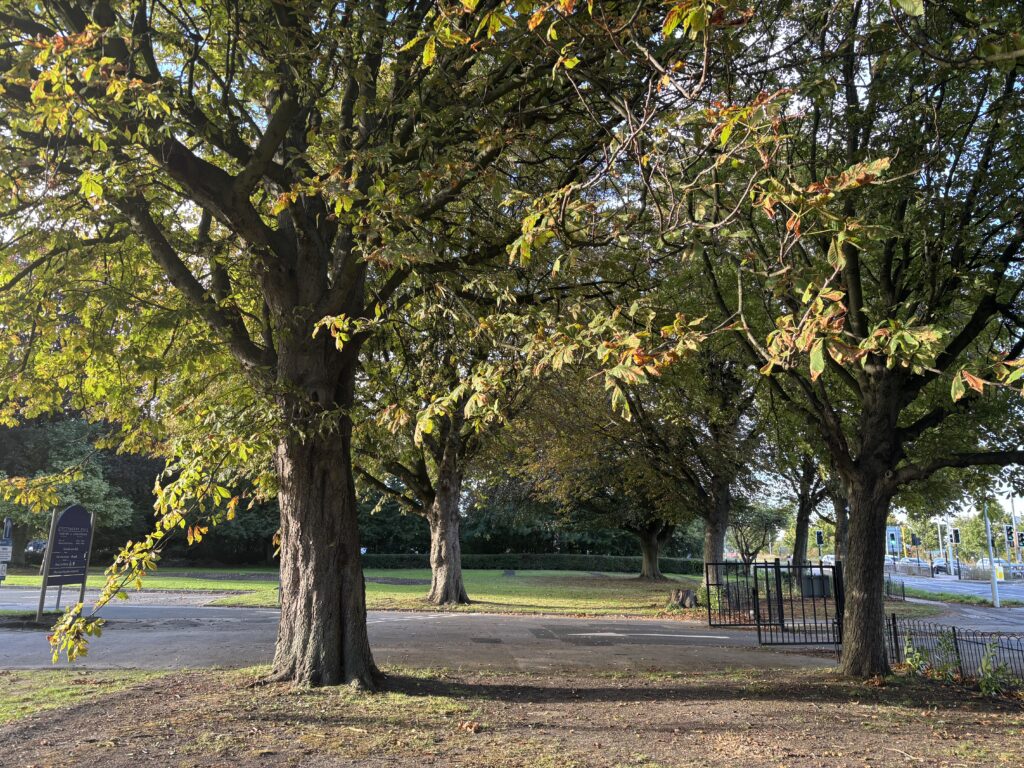
As October begins, we start to experience all that autumn has got to offer. This is a season of recognising and marking both the departures and the arrivals taking place in the natural world around us.
It’s not surprising therefore that this is a month of traditional festivals such as Harvest and All Hallows Eve (Halloween) that both fall in October, bookending the start and end of the month.
Given the connection to All Hallows eve and the subsequent remembrance and prayers for departed souls, I thought I would pay a visit to Cottingley Hall cemetery as the unique open spaces of cemeteries and church graveyards can also provide useful habitat for our local wildlife.
Many of our South Leeds cemeteries and old churchyards such as those surrounding St Mary’s, in Beeston, have a significant number of mature trees that have been left to stand for generations, protected from new urban developments, with their trunks thickening, bark twisting and peeling over time, creating cracks in the wood for insects and providing important food and canopy cover for birds.
When arriving at the entrance of the driveway at Cottingley Hall, visitors are greeted by several enormous horse chestnut trees, which, at the time I visited in late September, had shed hundreds of glossy brown conkers around the base of their trunks.
I took a handful back home and set these polished wooden jewels on my shelf as a reminder to embrace the treasures that autumn has to offer.
Neighbouring these horse chestnut trees were a few large beech trees laden with beech nuts that were dropping every few seconds from the branches onto the ground below, where some squirrels were busy leaping and scurrying about enjoying the bounty. Beech nuts are an important part of a squirrel’s diet due to their nutritional value and are a great energy source for them, especially ahead of the winter months.
Grey squirrels were introduced to the UK in the 1800s from North America so are considered an invasive species. Since this time, they have spread rapidly and become perhaps our most familiar wild mammal in the UK. Grey squirrels are fun to observe but they can also be a nuisance to wildlife and have had a devastating impact on the decline of our red squirrel populations. However, they do also have positive influences too, serving as an important food source for predators such as buzzards and foxes and contributing to seed dispersal for our native trees including oak and beech.
Whilst I wandered around the cemetery, I could hear in the bushes and trees around perimeter a mix of different birdsong and calls from robins, great tits, sparrows, goldfinches and even a chiffchaff who I thought was a little late to be hanging around in South Leeds and should really be setting off for his migration to southern Europe for the winter.
Indeed, many of our summer migrating birds (swallows, swifts and martins) have now departed which does leave me with a pang of sadness, as it’s a reminder of another summer passing. Typically, we tend not to notice the precise day when our migrant birds leave, but their absence becomes apparent in the quieter skies and the changing character of the evenings. I saw my last small gathering of swallows in the fields behind White Rose in early September, but now the skies have gone quiet.
On the flip side, new arrivals such as redwings and fieldfares are on their way to make northern England their home over winter and will be visiting our parks and hedgerows to feast on the berries and worms. You may also spot geese and swans honking above as they fly overhead in a V shape formation on their way to nearby nature reserves at St Aiden’s and Fairburn Ings, travelling all the way from Scandinavia and the Arctic.
Harvest festival at the beginning of October offers a marker in the year to acknowledge the fruits of the labours of our farming community and to give thanks for the food that the earth has produced. In an urban setting, we can tend to feel disconnected to the production of our food and the land where it comes from, but it is not completely out of reach, as nature continues to produce in pockets of our neighbourhoods if we take time to notice.
It is still apple season, and you can find many wild apple trees in sections of grassland, roadside verges and scrub across South Leeds. One such example are the apple trees that line the steps that run down from the side of Beeston Primary school towards Elland Road.
It is sad that nowadays, we have been conditioned to have a tendency to only trust the food from supermarkets and rarely think to consider picking nature’s free gifts to us. As a result, a lot of these apples never get eaten. However, the fallen apples don’t all go to waste as they still become a vital source of food for the local insects and birds.
Fungi are also fruiting at this time of year. Along with the changing colour of the leaves, the emergence of fungi is my favourite association with autumn. They appear almost suddenly, in all shapes and sizes, pushing through grass and fallen leaves and clinging to old wood and tree stumps. Keep your eyes peeled and you will start to see them all over the place, in your back garden, local parks and anywhere near a cluster of trees.
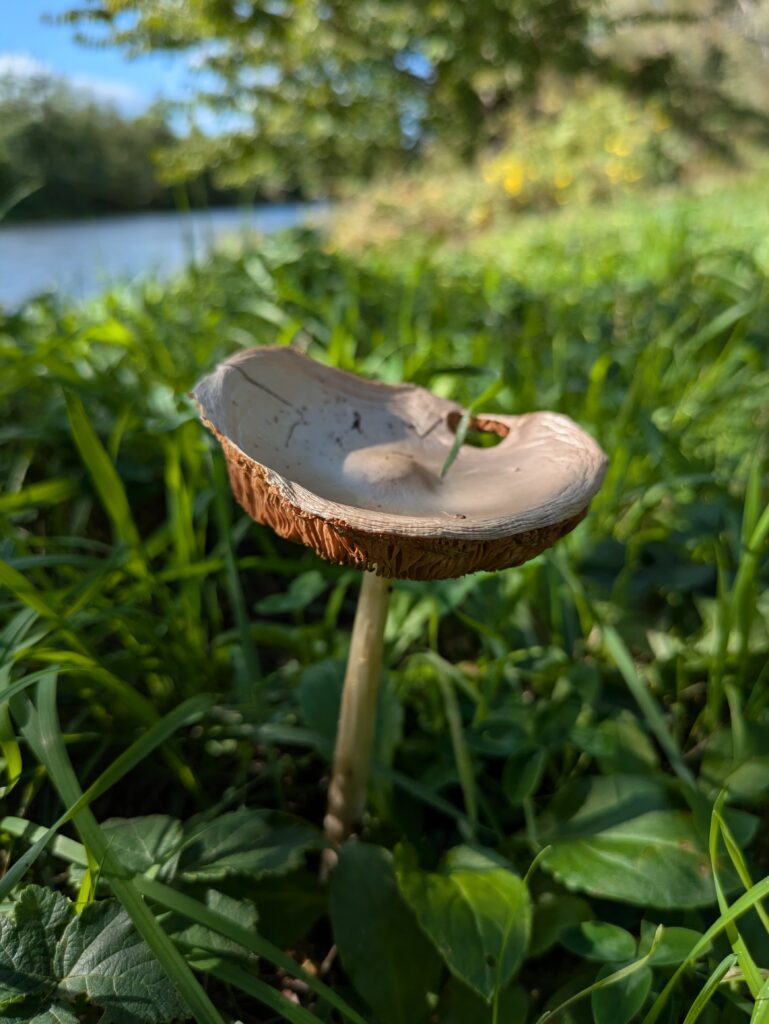
I took this picture of a classic toadstool shaped mushroom whilst on a walk down by the river near Thwaite Mills. I’m very much a beginner, so I’m not certain what kind of mushroom this is, perhaps a type of agaricus, but if anyone knows, please get in touch.
Fungi are a reminder that autumn is not simply a season of things dying back. As leaves fall and plants decay, fungi help break down what has been left behind, returning nutrients to the soil and making them available for new growth. In that sense, perhaps we could see them as representing the contradiction of October, life emerging from decay, and the harvest of one season becoming the foundation for the next.
This post was written by Duncan Wells
While you’re here, can we ask a favour?
South Leeds Life is published by a not-for-profit social enterprise. We keep our costs as low as possible but we’ve been hit by increases in the print costs for our monthly newspaper which have doubled in the last two years.
Could you help support local community news by making a one off donation, or even better taking out a supporters subscription?
Donate here, or sign up for a subscription at bit.ly/SLLsubscribe

What a lovely article, really enjoyed reading. Thanks