

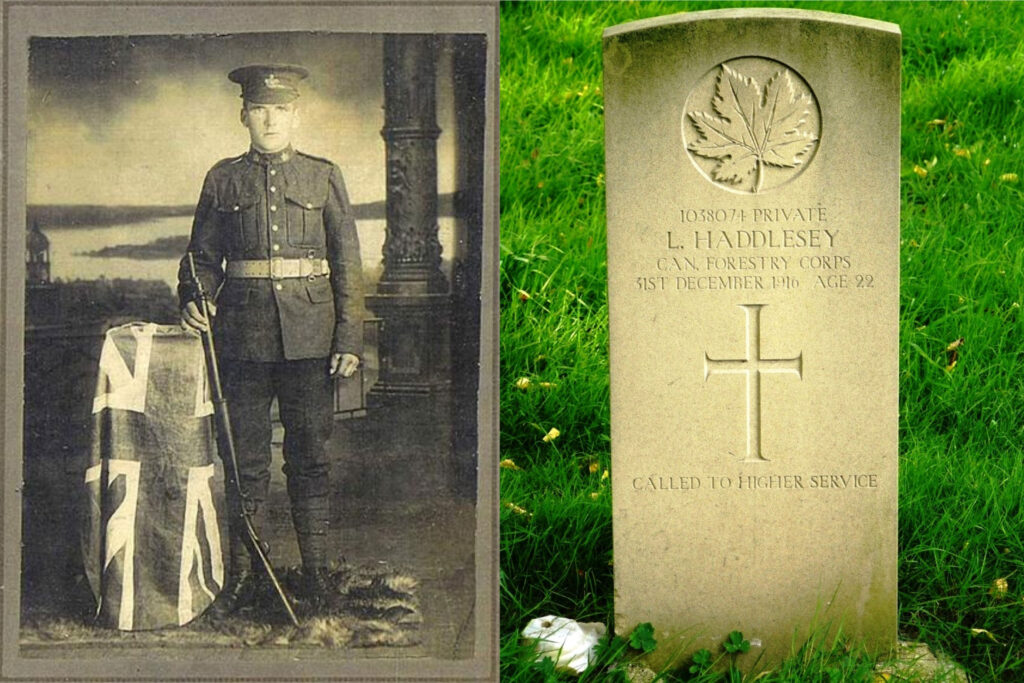
I was born in South Leeds, but now live in Quebec, Canada. I was back in Leeds for a visit last April and took a walk through Holbeck cemetery where some of my family are buried.
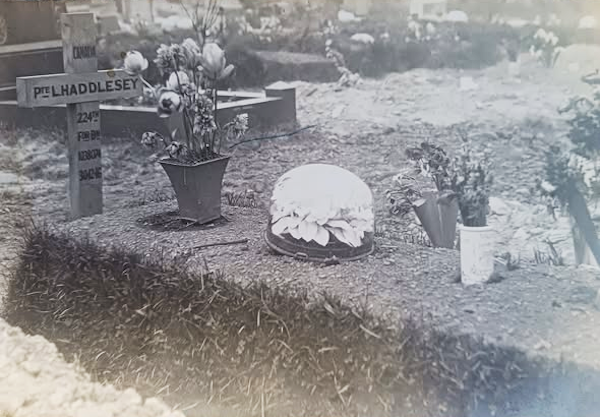
I was surprised to find a WW1 war grave for a Canadian soldier, Private Lewis Haddlesey, a member of the Canadian Forestry Corps. I asked myself, ‘what was the Canadian Forestry Corps and why was this man buried in Beeston, hardly famous for its forests?’
By coincidence, when I got back to Canada there was an article in the local newspaper about the Corps.
The Canadian Forestry Corps, nicknamed The Sawdust Fusiliers, was formed in 1916. The army needed a massive amount of wood for railway sleepers, trenches, duckboards and, yes, coffins. The ships bringing timber from Canada, Scandinavia and Russia were harassed by submarines and there were more vital supplies that needed to be shipped.
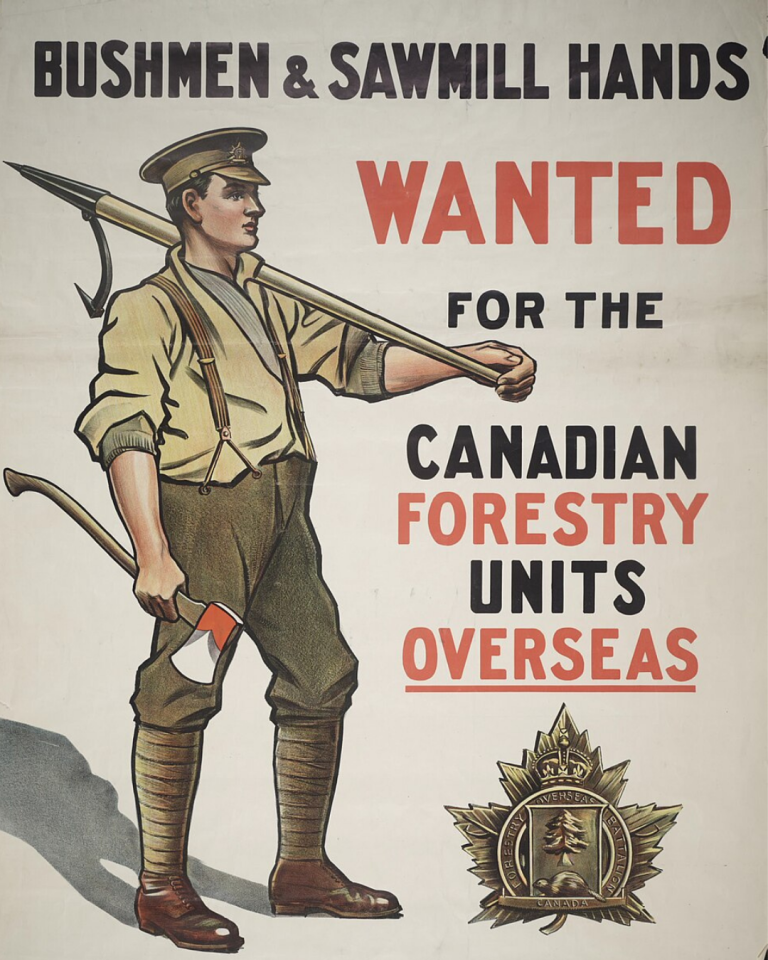
The Colonial Secretary asked the Governor General of Canada for a “Battalion of Lumbermen,” to help “exploit the forests of Britain.” From 1916 to 1918 35,000 men were brought over with fully equipped Canadian built sawmills. Based in Surrey near Windsor, the men worked in Scotland and France where some companies cut spruce exclusively for aeroplane production for the Royal Flying Corps.
Working conditions were difficult and dangerous, even though they were far from the trenches. In fact they were paid more than an ordinary infantryman. On 10 July 1916 The Times noted the valuable contribution of the Canadian lumbermen:
“If you would know the lumberman of Canada and how he works, go to the edge of Windsor Great Park There, on the Clock Case Plantation, you will see over 150 men of the 224th Canadian Forestry Battalion converting trees into railway sleepers and boards at the rate of anything from 15,000 to 20,000 board feet a day … The lumber camp is all Canadian – men, machinery and methods. The men, who are drawn from all parts of the Dominion, have the bronzed, healthy look and the easy confident swing which we have learned to look for in Canadians. The khaki under their blue overalls proclaims them soldiers; they draw military pay and they know the rudiments of military drill; but first and last they are woodsmen with their craft at their fingertips.”
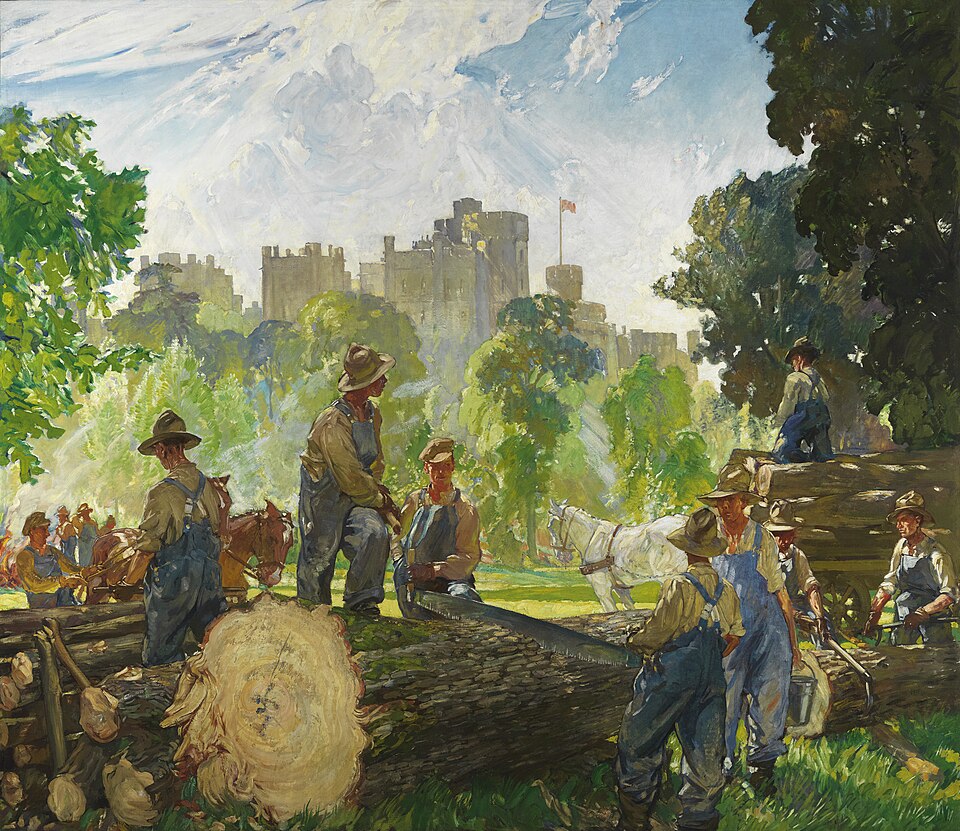
The Corps was so efficient that not just Windsor Great park lost most of its trees, but it was estimated that by the end of the war 1918, 182,000 hectares of woodland had been felled in Britain – an area larger than modern-day Greater London.
So, who was Private Lewis Haddlesey? A few years ago his great-niece Frances Haddlesey wrote on the Friends of Oakville (Ontario) Facebook site:
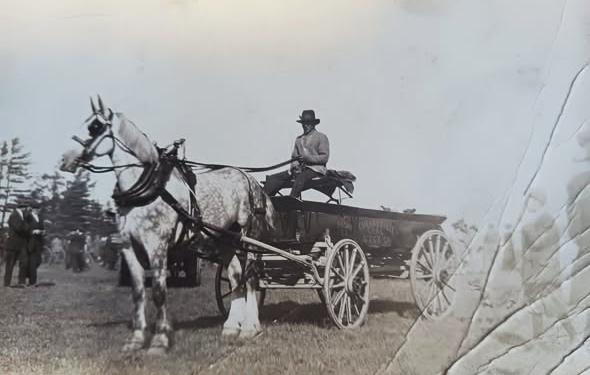
“My Great Uncle, Lewis Haddlesey arrived in Canada from England with my Grandad, Charles Percy as Barnardo Boys in the early 1900s to work for farmers in the Palermo, Ontario area. Lewis eventually took a job with the Oakville Coal & Ice Company as a teamster (a person working with a team of horses, oxen or mules pulling a wagon). They both returned to Britain with the Canadian Army in 1916.”
She posted a picture of Lewis driving a team at an agricultural show and a picture of a grave.
Between 1869 and 1948, over 100,000 children arrived in Canada from Great Britain as part of the British Child Emigration Movement. Known as British Home Children they generally came from disadvantaged backgrounds. Some were orphans but many had families with financial troubles that left them unable to care for their own sons or daughters. While not the founder of the Canadian child emigration scheme, Barnardo’s organisation became the largest sender of British children, responsible for an estimated 30,000 children arriving in Canada between the 1880s and 1940s. Although widely supported at the time, the program was eventually surrounded by controversy as many of the children had been abused or exploited.
I have not been able so far to contact Frances, nor discover anything more about the brothers’ lives in Ontario. However, one source of information lay open, official military records.
In Britain in September 1940, during an air raid on London, the War Office record depot was destroyed by incendiary bombs. About four million out of 6.5 million First World War service records were destroyed. Not so for the Canadian records. A very comprehensive archive is maintained by the Canadian government and it revealed the following:
Lewis was born on 15 February 1896. (This would make him 20 years old when he was killed, not 22 as is marked on the gravestone). He was 5’6¾”, fresh complexioned, blue eyes and brown hair. Under the heading ‘Distinctive marks and marks indicating congenital peculiarities, or previous disease’: Mole left shoulder blade. Scar right of spine above waist line. He lived in Oakville, Ontario and was a teamster. He was single and Church of England. A later medical report stated that his vision was defective but otherwise fit for duty.
Lewis Haddesley had joined up, ‘taken on strength’ is the term used, on 24 August 1916 in Toronto. On the same day, his 27 year old brother, Percy Charles signed on in St Catharine’s, 75 miles away. They were given consecutive army numbers in the Canadian Expeditionary Force.
Young men who had come to Canada as Home Children felt their mother country needed help.
In the end, an estimated 10,000 of these young immigrants volunteered to join the military during the First World War. For many, the opportunity to return home was a strong motivation to serve. Once in the United Kingdom, they could then try to track down the families they had been forced to leave behind years before. Some British Home Children also saw military service simply as a chance to escape cruel or abusive families in Canada.
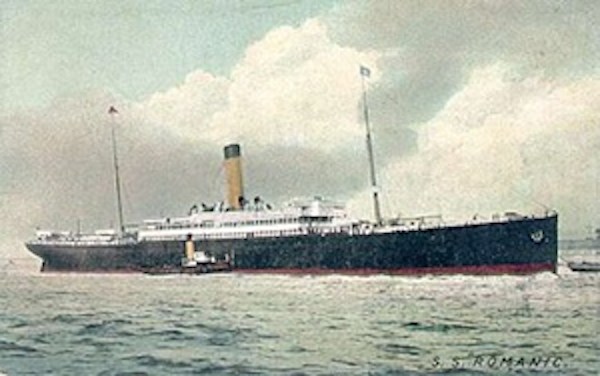
Two months later on 11 October the brothers sailed from Halifax, Nova Scotia arriving in Liverpool 11 days later. The ship, the SS Scandinavian certainly knew the way. It had been a sister ship to The Titanic under the name of The Romanic. It had 200 first class and 200 second class berths and 800 steerage quarters for immigrants to Canada. When the St Lawrence river was icebound in winter it docked in Boston. Sold to the Canadian Allan Line she was converted to a troop ship in 1914. She could well have crammed in 3,000 troops.
Where the brothers were sent on landing is not recorded but on the 5 December Lewis is transferred from the Expeditionary Force to the Forestry Corps in London, then on 8 December to Witley Military camp in Surrey. Three weeks later he was dead. Not every soldier is killed in battle. The Coroner’s Report gives the details:
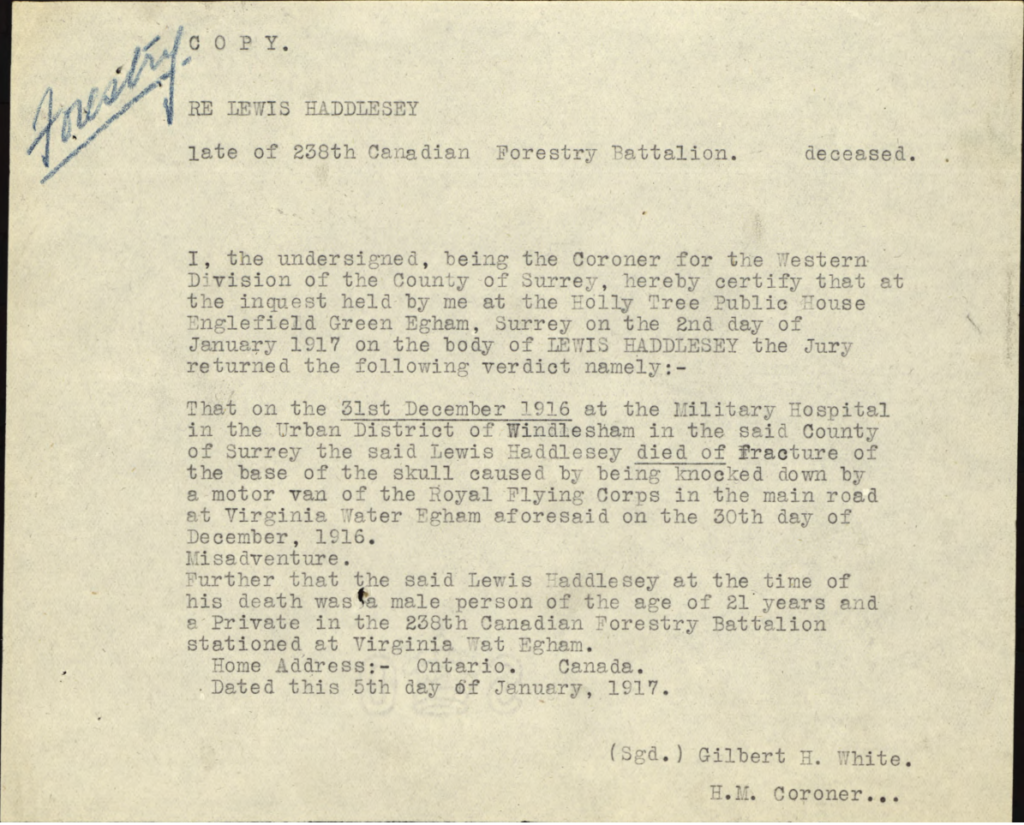
“The jury returned the following verdict, namely:-
“That on 31 December 1916 at the Military Hospital in the Urban District of Windlesham in the said County of Surrey the said Lewis Haddersley died of fracture of the base of the skull caused by being knocked down by a motor van of the Royal Flying Corps in the main road at Virginia Water Egham aforesaid on the 30th day of December 1916.
“Misadventure.”
Was his faulty eyesight to blame? The Military Hospital at Windlesham Manor, the home of Lady Ellenborough, had already cared for 120 members of the Forestry Corps, showing how dangerous the work was.
During the war many large houses were offered to the government, for example, Temple Newsham and Beckett’s Park in Leeds. In World War 2, Lotherton Hall and Harewood House became military hospitals.
Windlesham Manor has a claim to fame in that between 1947 and 49 the renovated house became the home of Princess Elizabeth and Prince Philip. The newly born King Charles spent his first months there.
So why was his body brought to Beeston? Well, Lewis Haddlesey was a Yorkshireman. His grandfather’s gravestone is in Dewsbury Cemetery. He was born in South Duffield, near Selby and probably moved to the West Riding to find work.
On Lewis’s army documents it states: Next of kin: John William Haddlesey of 37 Garnet Grove Leeds. This was a terrace house just off Dewsbury Road. Their father was alive when the brothers enlisted in August but a John William Haddlesey, a 60-year-old labourer is buried in Dewsbury cemetery having died on 29 November 1916, just one month before Lewis was killed. Lewis’ back pay was sent to the Garnet Grove address to EJ Haddlesey (Brother). The amount is marked 100 Canadian dollars (5 months at $20 per month) and presumably converted into Sterling. Did this money pay for the respectable grave marked with a simple wooden military marker whose photo great-niece Frances posted on her site? Had Lewis been in contact with his father and brother when he came over to England?
Had they had chance to meet? What of his mother? Had she died and being unable to bring them up alone, the father felt it better that two of his sons should be sent to Canada?
The total number of military men on both sides who died in WW1 is estimated at between 8 and 10 million, two-thirds in battle. Civilian deaths were many millions more. All were unnecessary.
Everyone of them would have had a story as sad as Lewis’ to tell.
If anyone has any information about the family, I would be very happy to hear from them and can be reached at mikebarber2019@outlook.com
This post was written by Mike Barber
We encourage anyone living or working in South Leeds to use this website to tell their news. You can either use the Create an article for South Leeds Life page, or email us at: info@southleedslife.com
Acts of Remembrance
The following Acts of Remembrance will take place at War Memorials in South Leeds on Remembrance Sunday 8 November:
10:45am Holbeck Cemetery, Fairfax Road, LS11 8SY
A Remembrance service led by St Luke’s Church. People of all faiths and none are welcome.
12:30pm Hunslet Spire, Church Street, LS10 2QY
1pm Stourton War Memorial Wakefield Road/Pontefract Road LS10 1DY
1:30pm Hunslet Cemetery War Memorial, Middleton Road, LS10 3BN
2pm Hunslet Carr Wheel, Balm Road/Moor Road, LS10 2DH
Followed by refreshments at the nearby Woodhouse Hill Community Centre on Woodhouse Hill Road LS10 2DN
And on Remembrance Day, Wednesday 11 November:
10:45am Aspen Hill Village Care Home , Copper Hill, LS10 2AY
Remembrance Day Service for residents and staff.
10:55am St Peter’s Court, Dewsbury Road, Beeston, LS11 5NR
Act of Remembrance by War Memorial
While you’re here, can we ask a favour?
South Leeds Life is published by a not-for-profit social enterprise. We keep our costs as low as possible but we’ve been hit by increases in the print costs for our monthly newspaper which have doubled in the last two years.
Could you help support local community news by making a one off donation, or even better taking out a supporters subscription?
Donate here, or sign up for a subscription at bit.ly/SLLsubscribe

Thanks for sharing, really enjoyed reading all you learned about the person buried in that grave and their wider impact.
Such a very interesting piece of history, thank you for taking the time to research everything in this article