

 There was a time when a teenage boy’s influences were fairly easy to identify. His dad. His mates. His football coach. Maybe a teacher. A footballer whose poster was stuck to his bedroom wall.
Today, one of the most influential people in your son’s life might be somebody you have never met, broadcasting from a bedroom thousands of miles away.
And that worries me.
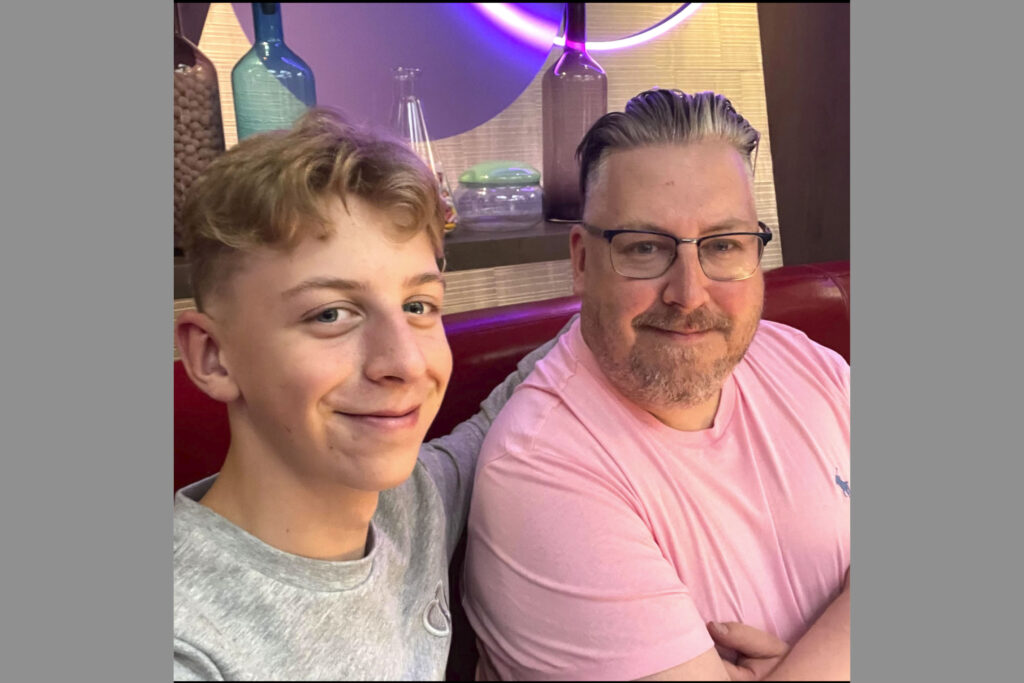
My son Sonny is 14. He lives with his mum and his older sister, and I’m very conscious that he is growing up surrounded by strong female influences. I think that’s a good thing. But he is also becoming a young man at a time when social media is constantly trying to tell boys what a man should be.
Be richer. Be stronger. Get the girls. Don’t show weakness. Don’t let anybody disrespect you. Drive this car. Wear this watch. Make this much money.
And, increasingly: don’t listen to women.
That is where, as a dad, my ears prick up.
Dad: I don’t want somebody else teaching my son how to be a man
I don’t think the answer is banning everything.
If I confiscated Sonny’s phone every time somebody online said something I disagreed with, firstly, I’d never see the phone again. Secondly, I’d probably make the person I was trying to protect him from seem far more interesting.
Teenage boys have always tested boundaries. I did. My generation consumed plenty of rubbish too; it just wasn’t delivered directly into our pockets by an algorithm specifically designed to keep us watching.
That’s the difference.
A boy watches one video about getting fit, making money or attracting girls and suddenly his feed can become progressively more extreme. Perfect bodies. Supercars. Aggression. Women presented as prizes. Kindness portrayed as weakness.
Some of it sounds superficially positive: work hard, exercise, take responsibility, have confidence.
I want Sonny to have all those qualities.
But confidence and arrogance aren’t the same thing. Strength doesn’t require cruelty. And being masculine doesn’t mean treating women badly.
My job isn’t to give Sonny a list of people he’s forbidden to watch. It’s to give him enough confidence and critical thinking to recognise nonsense himself.
That means talking.
Sometimes I’ll ask him: Do you actually believe that? Why? What do you think he’s trying to sell you? Would you talk to your mum like that? Your sister? Would you want somebody speaking about them that way?
That’s more useful than me shouting, “Turn that idiot off.”
And occasionally – an uncomfortable admission for any father – Sonny might have a point and I might not.
A balanced young man isn’t somebody who automatically agrees with his dad either.
Sonny: We know influencers aren’t our mates
Adults sometimes think teenagers believe everything they see online.
We don’t.
If somebody is standing next to a Lamborghini telling you that following their advice will make you a millionaire, most people my age know they’re probably trying to sell something.
But influencers are entertaining, and sometimes they do say things that make sense.
If somebody talks about working hard, going to the gym, being confident or not wasting your life, I don’t think that’s automatically bad just because that person has other opinions people don’t like.
You can agree with one thing somebody says without agreeing with everything.
I also think boys sometimes hear adults talking about “toxic masculinity” and it can sound like they’re saying masculinity itself is toxic.
There’s nothing wrong with wanting to be strong or competitive. There’s nothing wrong with wanting to earn money or look after yourself.
The important thing is how you treat other people.
And if Dad tried banning me from watching somebody, I’d probably just watch them somewhere else anyway.
Talking about why something is wrong works better.
Dad: Perhaps that’s the lesson
And there it is.
I’m trying to teach my son how to navigate the internet, while he’s reminding me what it’s actually like to grow up with it.
Perhaps protecting boys in 2026 isn’t about building a wall around them. We couldn’t even if we wanted to.
It’s about giving them a compass.
I want Sonny to become a man who can be strong without needing somebody else to be weak. Someone who can disagree with a woman without disrespecting her. Someone who understands that looking after his mental health doesn’t make him less masculine and that asking for help isn’t failure.
I want him to recognise the difference between somebody offering useful advice and somebody exploiting a young man’s insecurities for clicks, money or influence.
But I also don’t want him frightened of having opinions because his parents have already decided which ones are acceptable.
That’s the difficult bit.
Our sons need positive men around them. They need women they respect. They need friends, teachers, coaches, relatives and communities. And yes, they’ll have influencers too.
We probably can’t choose all the voices they hear.
What we can do is make sure ours remains one of them.
And perhaps the best protection we can give our boys isn’t telling them what to think.
It’s teaching them how to think independently.
This post was written by Dave Kelly and Sonny Kelly
We encourage anyone living or working in South Leeds to use this website to tell their news. You can either use the Create an article for South Leeds Life page, or email us at: info@southleedslife.com
While you’re here, can we ask a favour?
South Leeds Life is published by a not-for-profit social enterprise. We keep our costs as low as possible but we’ve been hit by increases in the print costs for our monthly newspaper which have doubled in the last two years.
Could you help support local community news by making a one off donation, or even better taking out a supporters subscription?
Donate here, or sign up for a subscription at bit.ly/SLLsubscribe
