

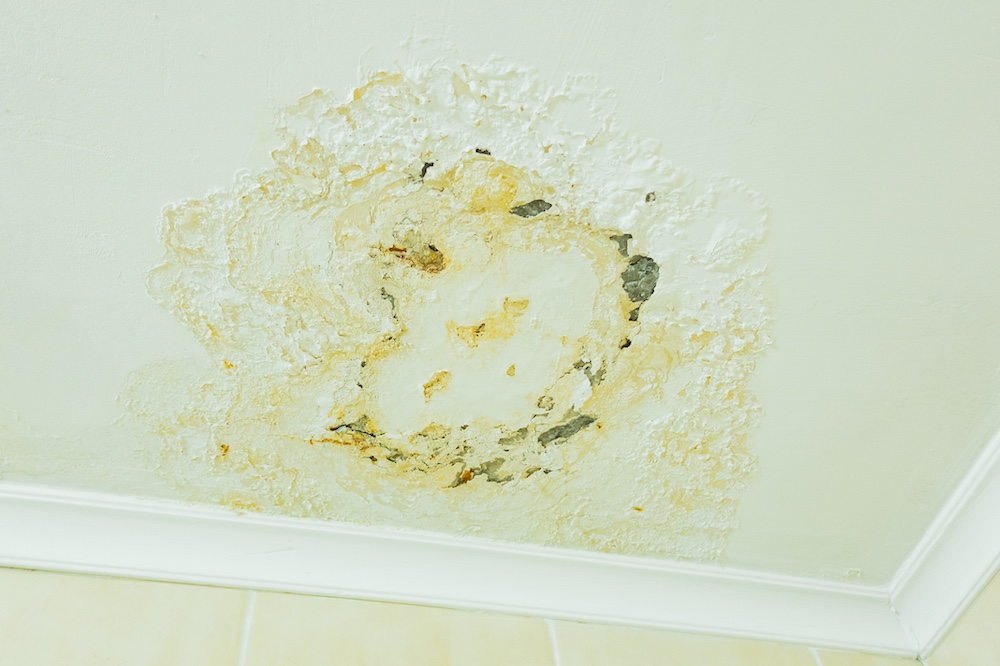
I noticed a tiny blob high up on my bedroom wall. In the half-light, and without my glasses, I was briefly horrified, convinced it was a spider.
Once I put my specs on, I realised it was just a small damp patch. I checked it again that evening, squinted, tilted my head, and decided it was no bigger than a 20-pence piece.
“It’ll go away,” I reassured myself.
And then, as we often do with small inconveniences, I chose to forget about it. The next time I really noticed, it had grown to the size of a 50-pence piece. Still, we were in the warmer months, so I figured it would probably dry out. It wasn’t in an obvious place, so I deliberately stopped checking.
Fast forward a few months, the paint was bubbling, lifting and looking like it was ready to peel off. The white wall had turned a strange coppery, rusty colour. It was starting to look very unwell. Worse still, the same thing was happening in my living room on the wall directly below. Paint blistering, discolouring, crusting, my home was starting to resemble a rustic Italian villa. Charming in Tuscany. Not great for my living room.
Eventually, I called the insurers. The assessor took one look and asked,
“How long has this been going on?”
“Erm, a few months,” I replied.
“Why didn’t you do something sooner?”
My honest answer?
“I hoped it would go away.”
As I write this in December, in preparation for the New Year, the reality of my decision to not do something sooner is very present. Professional teams are due to arrive to tackle the damage, drying out walls 24 hours a day, seven days a week, for several weeks. My beautifully decorated and fairly recently plastered walls will be chipped back, stripped to bare plaster, rebuilt and repainted.
It will be noisy, disruptive, messy and inconvenient.
As you’ve probably guessed, this article isn’t really about damp or insurance, although I’m grateful for both the cover and the expertise. It’s about what happens when we notice the first small sign that something isn’t right and choose, consciously or not, to look the other way.
There is value in not over-analysing every little thing in life. Some problems genuinely resolve themselves when we don’t heap on too much attention. But deep down, we usually know when something won’t sort itself out. We feel it in our gut. Our intuition gives us a nudge long before the damage becomes obvious.
This applies far beyond damp walls. How often have we sensed that something wasn’t quite right, physical health, mental health, relationships, work, or our emotional wellbeing, and then totally avoided addressing it because it felt uncomfortable? How often have we noticed someone else struggling and stayed quiet because we don’t want to cause offence or an argument, only to later say, “I knew something was wrong. I wish I’d said something”
As we begin 2026, my invitation is a gentle but important one: don’t let things slide.
If you start to notice rising damp in your life, those recurring worries, pressure that mounts, exhaustion, avoidance, or something that just doesn’t sit right, pause and pay attention. Listen to those tingly senses that whisper something isn’t right. Take action early. Have an awkward conversation. Ask the difficult questions. Make the appointment. Seek professional guidance. Apologise if you need to.
Yes, it might feel uncomfortable. But a brief inconvenience, an awkward moment, or an honest conversation is far easier to manage than the unravelling of something altogether. I’m typing this looking at my wall, knowing I should have never let things get so out of control. The point at which I could have managed the issue with minimum fuss, I didn’t. And while I can’t undo what is, I can learn from it.
Problems rarely disappear just because we stop looking at them. But they do become more manageable when we face them early, when they’re still the size of a 20-pence piece, rather than an entire wall or a relationship that needs rebuilding.
Shannon Humphrey is a First Aid for Mental Health Instructor and freelance workshop Facilitator for more information check out www.pathwaysforpositivity.com
While you’re here, can we ask a favour?
South Leeds Life is published by a not-for-profit social enterprise. We keep our costs as low as possible but we’ve been hit by increases in the print costs for our monthly newspaper which have doubled in the last two years.
Could you help support local community news by making a one off donation, or even better taking out a supporters subscription?
Donate here, or sign up for a subscription at bit.ly/SLLsubscribe

Amazing arricle. I enjoyed how you used your own experinence with your home repairs to make it make sense the topics your speaking about.
Really lile reading this well done