


Between 17 July – 9 August is the Big Butterfly Count. This is a citizen science project that asks the public to spend 15 minutes in a sunny spot counting the butterflies and moths you see to help assess how our native species are faring.
You can find out more on the website www.bigbutterflycount.butterfly-conservation.org or download the app to help identify and record your sightings. It would be interesting to find out what the most common species of butterfly is across South Leeds. If I was to guess, it would be the large white, as this is the UK’s most widespread and abundant species.
Early indications this year are that butterfly numbers have recovered somewhat from a run of record lows, especially in 2024 which was one of the worst years on record for butterflies in the UK due to the exceptionally wet summer. One species in particular, the painted lady, is having an especially good year with data showing the largest arrival of these butterflies for 17 years after early heatwaves and favourable winds ushered thousands of these colourful insects northwards from sub-Saharan Africa and southern Mediterranean. The painted lady is a relatively large butterfly with peachy orange, black and white intricately patterned wings. Its name is thought to originate from the ornate appearance of its wings, which early naturalists believed looked delicately hand painted.
I can testify to this influx last month when I noticed several painted lady butterflies feeding on some red valerian flowers growing in my front yard. These bold pink flowers which cluster at the end of a green stem, resembling the shape of a small toilet brush, can be found everywhere across South Leeds. They like to grow alongside pavements, rocky waste ground and old walls and buildings and are a magnet for insects. It is incredible to think that these migrant butterflies have travelled so far, across continents and oceans at altitudes of over 500 metres, to end up on a driveway in Beeston. If the colours on a painted lady appear faded, it is often a sign that the butterfly has already completed a long journey. During the summer they will breed, laying eggs on thistles and mallow flowers, after which, a fresh generation emerges later in the season, ready to begin the return journey towards North Africa.
The same red valerian flowers on my driveway recently attracted another migrant visitor: a hummingbird hawk-moth. I was fortunate enough to spot one while working from home, noticing something hovering among the flowers outside my window. I have only seen these remarkable moths a handful of times, and each encounter feels slightly surreal as I expect them to be more at home in a tropical rainforest rather than in northern England. Their furry bodies hover effortlessly in mid-air, producing an audible hum while a long proboscis reaches deep into flowers to feed on nectar, so at first glance they can easily be mistaken for a hummingbird.
These moths migrate from southern Europe and can be seen in daytime visiting buddleia, honeysuckle and red valerian between May and September, with July typically being the peak month. Their annual arrival is another reminder that South Leeds is connected to wildlife movements taking place across entire continents.
The painted lady and the hummingbird hawk-moth are just two examples of the many insects that depend on wildflowers for food and breeding habitat. In recent years, efforts to leave some grass verges and parkland uncut, alongside sowing wildflower seeds on roadsides and roundabouts, are beginning to make a noticeable difference. I have been particularly impressed by the variety and abundance of flowers growing around Elland Road and the M621.
Not too far from Elland Road roundabout lies another, lesser-known haven for wildlife. Behind the back-to-back terraces of Holbeck, stretching towards the trees bordering the A643, is an area where nature has largely been left to its own devices.
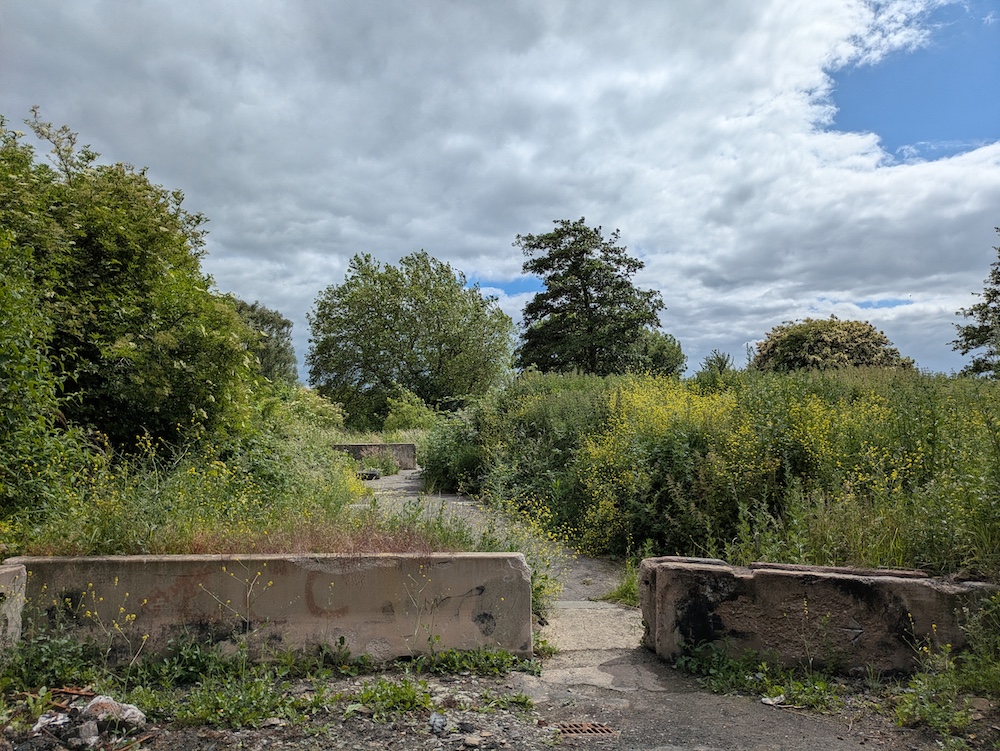
The easiest access point is from Brown Lane, opposite Holbeck Moor playing fields. There is no official entrance, just a gap between two concrete blocks, however after passing a few metres of discarded debris, the path emerges into an unexpectedly wild landscape of grassland, shrubs, wild roses and a rich variety of flowers. The first time I visited, it felt like stumbling upon Holbeck’s own secret garden.
I do not even know whether the area has an official name, evidence of former buildings remains in scattered patches of concrete and old floor tiles, but nature is steadily reclaiming the site. Places like this are ideal for wildflowers. The thin, nutrient-poor soils that develop on former industrial land can create perfect conditions for many native species that struggle to compete elsewhere. As a result, these overlooked spaces can become important refuges for butterflies, moths and other pollinating insects.
I don’t know how long this place will remain untouched. Land suitable for development close to city centres is in high demand. For now, however, this forgotten corner of Holbeck provides a valuable sanctuary where wildflowers flourish and insects can complete their life cycles.
The butterflies and moths that emerge from these habitats do more than brighten our gardens and local green spaces. Some will eventually become part of migrations that connect South Leeds with communities as far away as southern Europe and North Africa, reminding us that even small patches of urban nature can play a role in much larger ecological and human stories.
Finally, for those who were hoping for an update on the kestrels featured in last month’s article, I am delighted to report that two fluffy white chicks have successfully hatched and are keeping their parents very busy.
Editors note: The site referred to is the former Matthew Murray High School and work is due to start shortly to build the Holbeck Sports Hub on the site.
This post was written by Duncan Wells
We encourage anyone living or working in South Leeds to use this website to tell their news. You can either use the Create an article for South Leeds Life page, or email us at: info@southleedslife.com
While you’re here, can we ask a favour?
South Leeds Life is published by a not-for-profit social enterprise. We keep our costs as low as possible but we’ve been hit by increases in the print costs for our monthly newspaper which have doubled in the last two years.
Could you help support local community news by making a one off donation, or even better taking out a supporters subscription?
Donate here, or sign up for a subscription at bit.ly/SLLsubscribe
