


It was the kind of opening line to a newspaper story that makes you sit up with a start or check to see if it’s April Fool’s Day
“Artificial intelligence could kill off humanity within the decade.”
The quote came from staff working for the AI firm Anthropic, one of whom has reportedly resigned because of his concerns.
So, what are we to make of this? After all, if some of the people who are developing AI say that it’s this risky, then shouldn’t the rest of us be very worried?
The honest answer is that we don’t yet know or fully understand how it might evolve. What we do know, however, is that it is coming and will transform all our lives, bringing both enormous opportunities and great risks. Being able to use AI to much more quickly develop a new drug to treat disease would obviously be a great benefit to us all, but allowing a terrorist to manufacture a dangerous virus is clearly something we must do everything in our power to prevent.
The UK has set up the AI Safety Institute to test experimental AI models so as to find weaknesses and advise companies on what they might be capable of doing. For that to work properly, however, we depend on all the AI companies being willing to share what they’ve developed so far. But this is a highly competitive race, with mind-boggling sums of money being invested on the basis that the eventual product will be sold in very large quantities to a large number of people.
The second challenge is the pace at which AI is developing and learning. It is truly astonishing and the question is ‘Do those developing it fully understand what it is capable of ?’”
Thirdly, how should governments attempt to regulate it ?
In the light of all this, some people are calling for a halt to the development of data centres; the proposed new Microsoft development at Skelton Grange in South Leeds – which will offer both cloud and AI services – being a case in point.
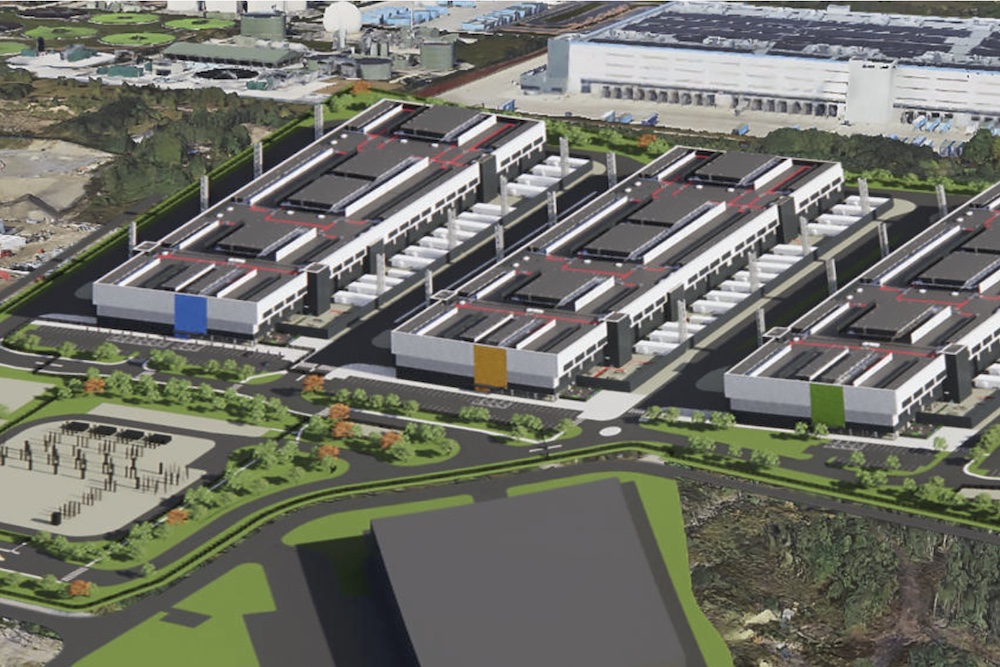
The first thing I would say in response is that data centres are now part of modern life. They hold our bank and NHS records, our personal documents and photographs from our smart phones and laptops, all the information needed for pensions and benefits, the records of almost all companies and lots of other things besides, as well as, increasingly, AI capacity. They are designated as critical national infrastructure by the Government, putting them on an equal footing with water, energy and emergency services. For these reasons, it’s hard to see how we can object to data centres in principle.
The opposition to data centres also focuses on the important questions of water and electricity use and potential noise nuisance.
On energy use and CO2 emissions, this is a critically important point, not at least because of the increasingly obvious consequences of climate change.
In the Microsoft case, as with any new development, it all depends on how the electricity to be used in the data centre is generated. Currently, just over half the electricity we consume in the UK is generated by renewables, and therefore the question is ‘will the centre be powered by renewables?’ But in any event, we must press ahead with a net zero future.
On cooling systems, it takes a lot of electricity and/or water to keep servers cool, so the question about how much water the data centre might use is an important one. The answer will depend on what type of cooling system the centre uses. Microsoft have said that the plan is to use an air-cooling system rather than water, apart from periods of hot weather when water will be needed, but we await more details.
And on noise, we must of course make sure that any impact is dealt with.
All of these things must and will rightly be looked at as part of the detailed planning process.
Coming back to the broader point about AI, this is a really important, complex and – yes – a worrying matter. Like all technological developments, our job is to make sure we regulate the risks so that we can enjoy the benefits, whether that be better healthcare, dealing with repetitive tasks or other uses that we can currently scarcely imagine.
No doubt – this debate will be continued.
I recently visited Re-Think in Holbeck. It’s a social enterprise that is passionate about making sure children have enough to eat. I first met Nathan, one of the founders, when he was headteacher of a local primary school. He set up a breakfast club after one of the children had confided in him that he came to school hungry every day.
Rethink is now working with a number of schools on this, as well as running a community pantry and a food bank. One of the interesting things about the organisation is that it’s not just dealing with the consequences of food poverty. It is also trying to campaign on the causes. I was very impressed.
Hilary Benn is our Member of Parliament. He represents the Leeds South constituency.
Email: hilary.benn.mp@parliament.uk | Website: www.hilarybennmp.com
Constituency office:
Unity Business Centre, 26 Roundhay Road, Leeds, LS7 1AB
Tel: 0113 244 1097
While you’re here, can we ask a favour?
South Leeds Life is published by a not-for-profit social enterprise. We keep our costs as low as possible but we’ve been hit by increases in the print costs for our monthly newspaper which have doubled in the last two years.
Could you help support local community news by making a one off donation, or even better taking out a supporters subscription?
Donate here, or sign up for a subscription at bit.ly/SLLsubscribe
